
What to Do With Stuff You Don't Want to Move (A Room-by-Room Guide)
What to Do With Stuff You Don't Want to Move (A Room-by-Room Guide)
One of the most overlooked parts of moving is figuring out what to do with everything you don't want to take with you. The old couch that's seen better days. The exercise bike that became a clothes rack. The garage full of things you haven't touched in three years.
Moving is one of the best opportunities you'll ever have to reset — but only if you deal with the stuff before moving day, not after. Here's a practical room-by-room guide to clearing out, donating, selling, and disposing of everything that doesn't deserve a spot in your new home.
Why Decluttering Before You Move Saves You Money
This isn't just about having a tidier new home. It's about dollars.
Remember — professional movers charge by the hour. Every extra box, every piece of furniture you're not sure about, every garage shelf you throw on the truck "just in case" adds time to your move and money to your bill. A lighter load moves faster. A faster move costs less.
The math is simple: spending a Saturday decluttering before your move can easily save you an hour or two of crew time — that's $150–$300 back in your pocket at GoodGuys' rates.
Your Options for Getting Rid of Stuff
Before going room by room, here's a quick overview of your disposal options:
Donate: Furniture, clothing, housewares, and appliances in good condition can go to local charities, shelters, churches, or Buy Nothing groups. Atlanta has no shortage of donation options — a quick Google search for donation centers near your zip code will surface plenty of local options.
Sell: Facebook Marketplace, Craigslist, and OfferUp are all strong in Atlanta. Larger furniture items often sell within a day or two if priced right. Even a few hundred dollars from selling unwanted items can offset moving costs.
Recycle: Electronics, metal, cardboard, and certain appliances can often be recycled rather than trashed. Check with your local municipality or a dedicated electronics recycler.
Trash: Some things just need to go. For large volumes, renting a dumpster or hiring a junk removal service is more efficient than multiple trash runs.
Junk Removal: For furniture, large items, or anything too heavy or bulky to handle yourself, professional junk removal takes everything off your hands in one trip. More on this below.
Room-by-Room Decluttering Guide
Living Room
The living room usually holds the biggest and most expensive items in the house, so decisions here matter most.
Sofa and seating: Be honest about whether your current sofa works in your new space. If it's worn, oversized for the new layout, or just not something you'd buy again, now is the time to let it go. Large sofas are one of GoodGuys' most common junk removal pickups — one call and it's gone.
Entertainment units and TV stands: Large media consoles often don't survive moves well and may not fit the aesthetic of a new home. Sell on Facebook Marketplace or have it removed.
Rugs and décor: If it doesn't go with the new space, don't move it. Rugs take up significant truck space and weight.
Books: Donate to your local library, Little Free Library boxes, or a used bookstore. Only move the ones you'll actually read again.
Kitchen
Kitchens are deceptively full of things that never get used.
Appliances: The countertop appliance graveyard is real. The panini press, the juicer, the bread maker — if you haven't used it in a year, donate it or sell it. Small appliances in working condition sell quickly on Marketplace.
Pots, pans, and cookware: Most people have duplicates or pieces they never use. Pare down to what you actually cook with.
Pantry: Movers can't transport open food and liquids. In the weeks before your move, plan meals around what's in your pantry and freezer. Donate unopened non-perishables to a local food bank.
Dishes and glassware: If you have chipped, mismatched, or excess pieces, donate them before packing. Every dish you donate is one less thing to wrap, box, and unbox.
Bedrooms
Clothing: The moving process is a natural forcing function for a closet cleanout. Anything you haven't worn in a year, anything that doesn't fit, anything you keep "just in case" — bag it up and donate it. Clothing is one of the easiest things to donate and one of the heaviest things to move unnecessarily.
Furniture: Bed frames, nightstands, dressers — if they're worn or don't fit your new space, sell or remove them before moving day. Large furniture items are time-consuming to move and take up significant truck space.
Children's rooms: Kids outgrow toys, clothes, and furniture fast. Moving is a great time to donate outgrown items to families who need them. Involve your kids in the process — it helps with the transition and teaches a good habit.
Mattresses: Old or guest mattresses that aren't making the move should be disposed of before moving day. Mattresses are large, heavy, and awkward — GoodGuys can remove them as part of a junk removal job.
Home Office
Old electronics: Computers, monitors, printers, and cables accumulate fast. Old electronics should be recycled responsibly — many Best Buy locations in Atlanta offer free electronics recycling. Don't move tech you're not using.
Paperwork: Moving is a great time to go through files and shred what you no longer need. Reduce what you're boxing up.
Furniture: Bulky desks and filing cabinets that won't fit the new office can be sold or donated. Metal filing cabinets in particular are heavy and slow to move.
Garage and Storage Areas
The garage is where decluttering procrastination lives. Most people haven't looked at half of what's in there in years.
Tools and equipment: Keep what you use. Donate or sell duplicates and anything specific to your current home (like a lawnmower if you're moving to a condo).
Sports and outdoor equipment: Bikes, kayaks, camping gear, golf clubs — if you haven't used it in two years, be honest about whether you will. These items take up significant truck space.
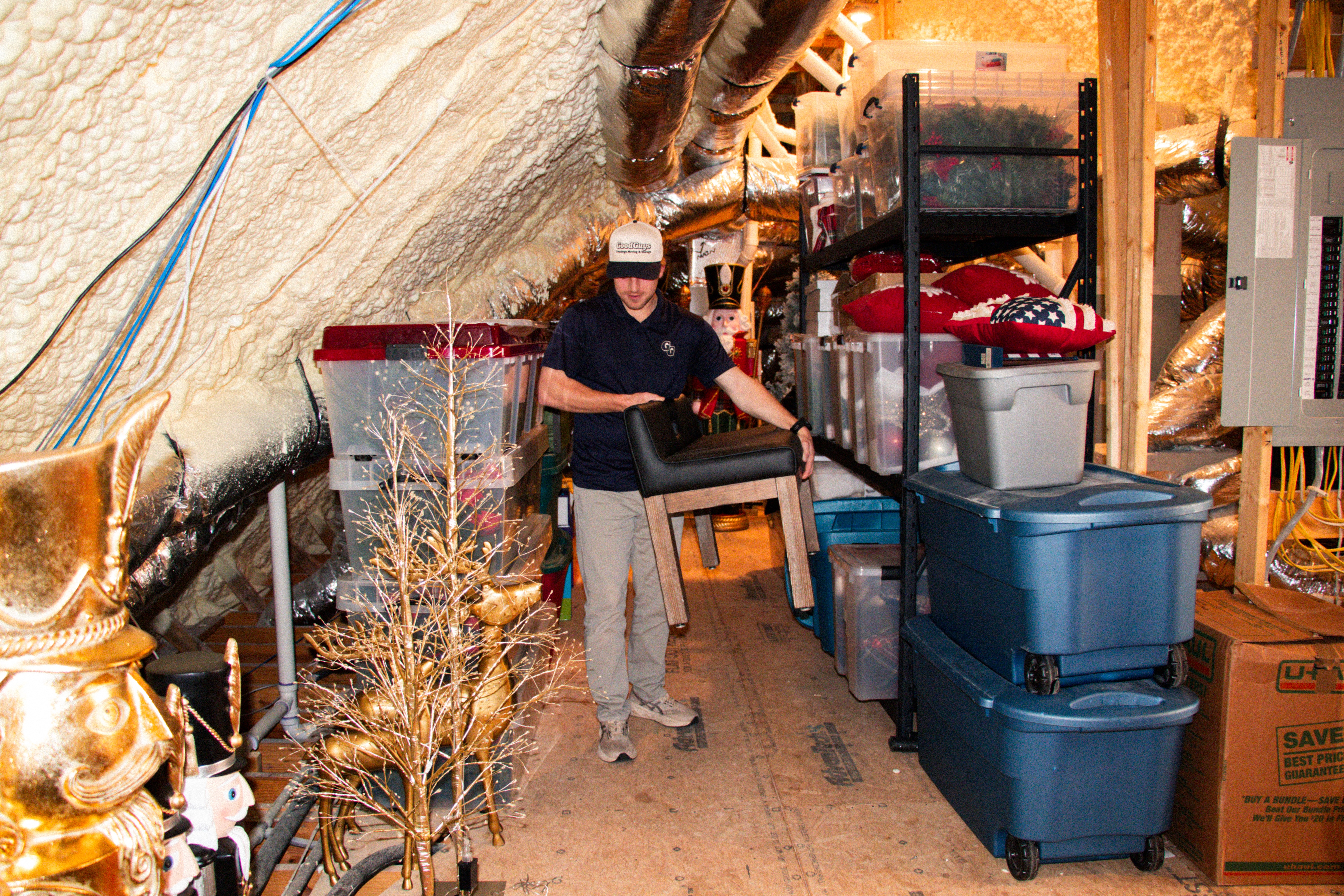
Holiday decorations: This is the one category where people keep more than they need. If you're moving to a smaller space, edit down to what you'll actually use.
Paint and chemicals: Note that most junk removal services — including GoodGuys — cannot take liquids or chemicals due to the risk of damage to trucks and environmental regulations. Leftover paint, cleaning chemicals, and solvents need to be disposed of through your local hazardous waste program. Fulton County and most surrounding counties have periodic household hazardous waste collection events.
Outdoor Spaces
Patio furniture: Outdoor furniture is heavy, often weather-worn, and may not suit your new outdoor space. Sell or donate sets in good condition. Broken or heavily faded pieces can be removed.
Planters and garden items: Large ceramic planters are deceptively heavy and break easily in transit. If you're not attached to them, leave them.
Grills: A grill that's past its prime isn't worth moving. Sell a working one or have it removed.
GoodGuys Junk Removal: What We Take and How It Works
For everything that needs to go but can't be donated or sold, GoodGuys offers junk removal before or after your move. Here's what you need to know:
What we take:
Almost everything — furniture, mattresses, appliances, electronics, boxes, general household junk, yard waste, and more. The only items we can't take are liquids and chemicals, which can damage our trucks.
How it's priced:
Small items (lamps, chairs, small appliances): $75 per item
Large items (sofas, mattresses, large appliances, dressers): $100 per item
Large volumes (full rooms, garages, whole-home cleanouts): We'll give you an accurate custom quote based on how much truck space your load requires
When we can do it:
Before your move to help you declutter, or after your move to clear out anything left behind at your old home. Either way, it's a simple, separate booking.
What happens to your stuff:
Wherever possible, we sort items and attempt to donate or recycle rather than sending everything to a landfill. We can't make guarantees on every item, but we make the effort.
A Simple Decision Framework
When you're standing in front of something and can't decide, run it through this:
Have I used this in the last 12 months? If no — it's a candidate for removal.
Would I buy this again for my new home? If no — don't move it.
Is it in good enough condition to donate or sell? If yes — do that first.
Is it too big or heavy to deal with myself? If yes — call GoodGuys.
Frequently Asked Questions
When should I start decluttering before a move?
As early as possible — ideally 6–8 weeks out. Starting early means you can sell items (which takes time to find buyers), schedule donation pickups, and avoid the last-minute overwhelm of dealing with everything the week before your move.
Does GoodGuys take appliances?
Yes — most appliances are fine. The only things we can't take are liquids and chemicals due to the risk of damage to our trucks.
Can I schedule junk removal and a move on the same day?
Yes — we can coordinate both. Many customers do a junk removal run before the move to clear out what's not coming, then the move itself. Contact us to discuss scheduling.
How much does junk removal cost with GoodGuys?
Small items are $75 each, large items are $100 each. For larger volumes — full rooms or whole-home cleanouts — we'll give you a custom quote based on truck space. Reach out for a free estimate.
What do I do with paint and chemicals I can't move?
Most counties in metro Atlanta — including Fulton, Gwinnett, Cobb, and Cherokee — offer household hazardous waste disposal events. Check your county's website for upcoming dates and accepted materials.
Ready to clear out before your move? Contact GoodGuys for a free junk removal estimate — we'll take the big stuff off your hands so moving day is faster, lighter, and less expensive.